A Safe Walking and Cycling Network
Create a safe borough-wide cycle network so that people of all ages and abilities can make their journeys safely by bike.
We want pedestrians and those who choose to ride bicycles to be safe and to feel safe in RBKC.
RBKC’s own research shows that the biggest factor stopping people from switching to bikes is safety.
Their most recent survey asked, ‘What is your biggest concern about getting around on Kensington & Chelsea’s streets?’ and the number one answer was “cycling doesn’t feel safe”.
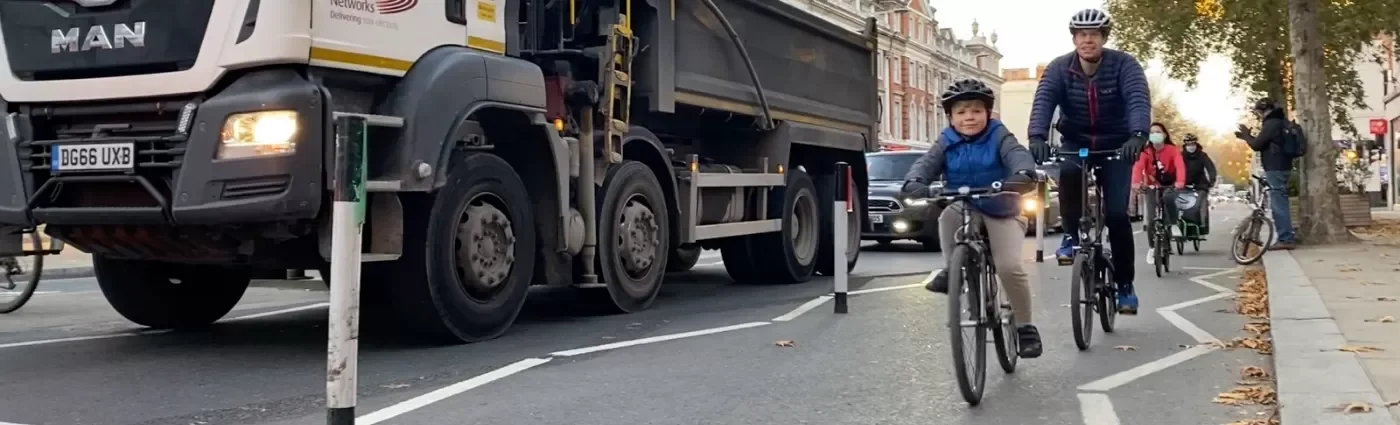
Across the world, evidence shows that the biggest barrier to getting people out of private vehicles and onto bicycles is safety, and the best way to address this is to provide physically segregated bike lanes on larger roads, together with a well-structured network on smaller roads.
This enables people to feel safe across their whole journey, not just an isolated part of it.
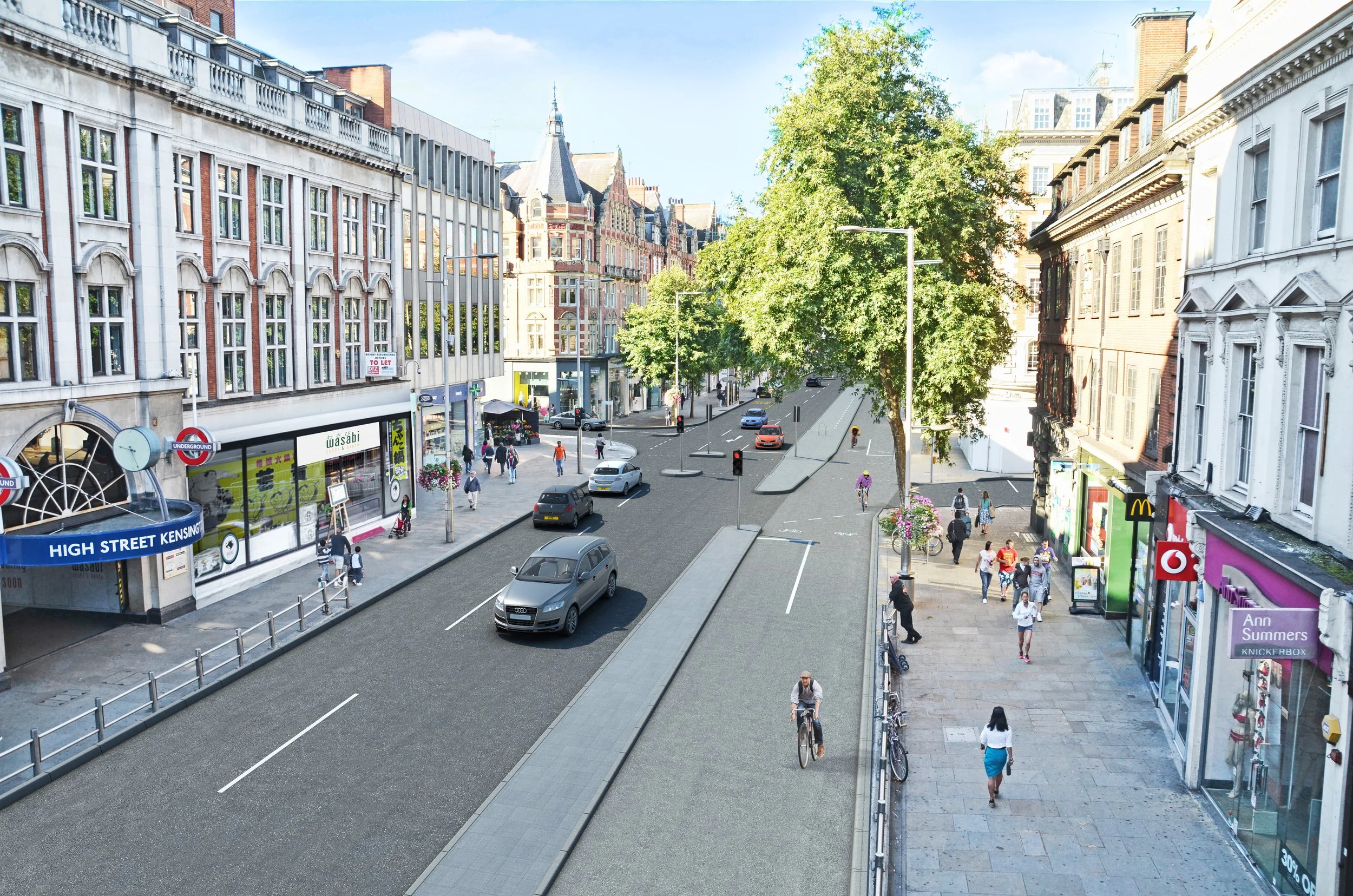
Historically, RBKC have restricted plans for a meaningful network for cycling to a small number of Quietways. Analysis of the modal share (i.e. proportion) of journeys in the borough since their introduction shows that they’ve had no material impact. It’s not surprising. The routes – found here – are so few and scarce across the borough that they are not likely to cover many real journeys people want to make, and the routes themselves are varied in usability. Would you let a competent 12-year-old use them? In almost all cases, probably not.
We’ve been encouraged by early signs of a fresh approach to this.
Building a safe network isn’t as difficult as it may sound, and infrastructure for those cycling, walking or wheeling goes hand in hand.
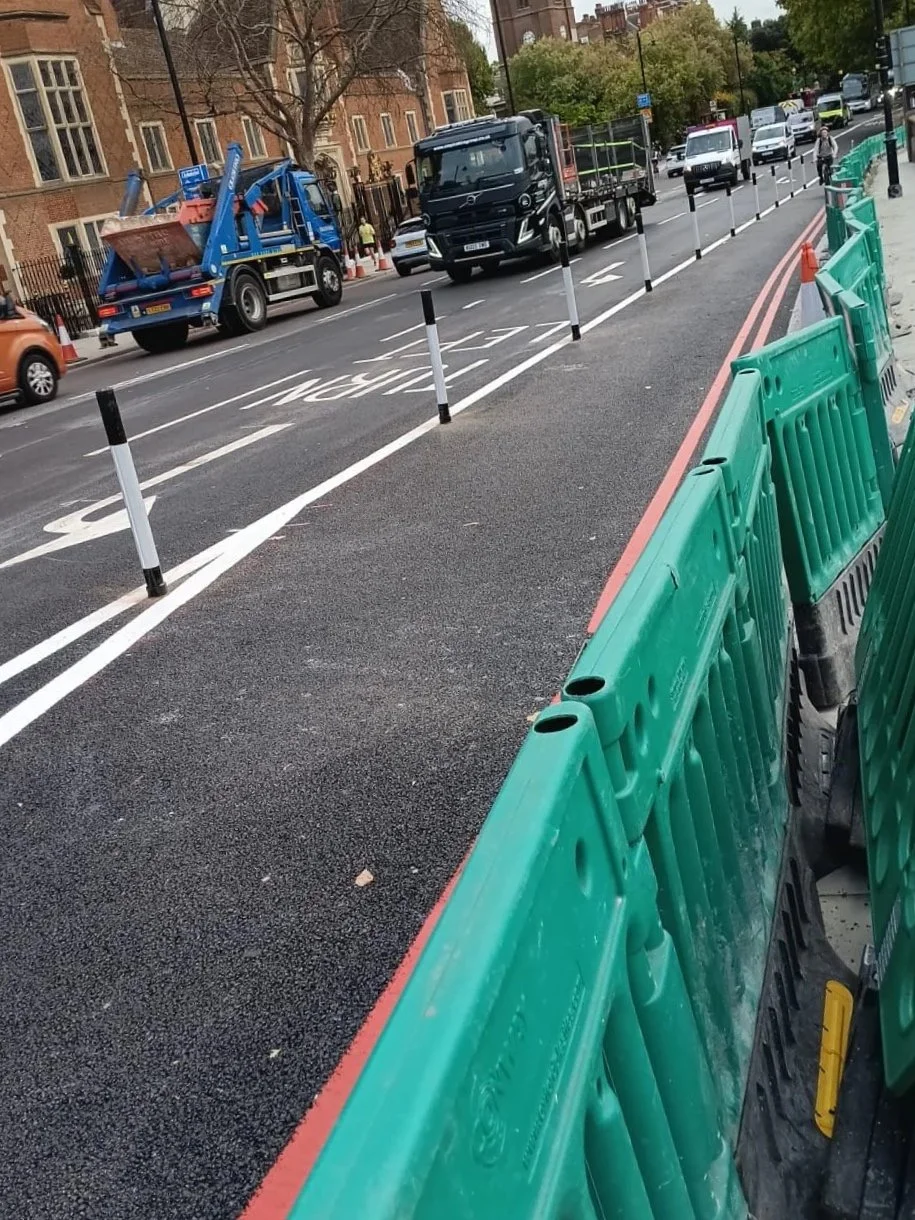
In short, this means about half a dozen of the busier and bigger main East/West or North/South roads have new physically protected cycle lanes, and then making sure traffic levels are quieter on the rest of the road network.
The bigger and busier roads needing cycle lanes have been identified over years of strategic research, and include High Street Kensington, Notting Hill Gate and Holland Park Avenue, Chelsea Embankment, Queen’s Gate, Chelsea Bridge Road and Warwick Road/Earls Court Road. They serve not only journeys people make within the borough, but also link up to protected routes that either already exist or are being built by other boroughs – for example, High Street Kensington is part of Cycleway 9 that connects with Hammersmith to the West, and Hyde Park and Cycleway 3 to the East.
But on most roads, protected cycle lanes are not needed, provided that other measures are taken to reduce motor vehicle traffic, for example, by rolling out Low Traffic Neighbourhoods. For example, in the area south of High Street Kensington, around Victoria Road – an existing Low Traffic Neighbourhood in RBKC – traffic levels are low and it’s already a good environment for people on foot, bike or wheeling.
This goal is backed up by government policy and a great deal of technical research and analysis (for example, design standards for the network need to meet the requirements of the Department for Transport – set out in LTN 1/20). Without it (unless we all just stay indoors), RBKC won’t meet its commitment to reduce the number of people killed or seriously injured while walking & cycling (KSIs) by 70% by 2030, against the 2010-14 baseline. This means a 68% reduction by 2026, in line with the Mayor’s Vision Zero targets adopted by RBKC council.
At least ten of the action points in the RBKC Climate Action Plan, in the transport section, will be meaningless (e.g., cycle training, encourage more people to cycle) without a safe cycling network.
113 people were recorded as killed or seriously injured (KSI) on RBKC roads in 2019. Protected cycle lanes reduce the risk of injury to cyclists by 40-65% [1]. Equality: the number one thing that will get most women cycling is space separated from motor traffic.[2]
[2] 67% of women surveyed by Sustrans cited ‘space separated from motor traffic’ as the number one thing that would get them cycling: Why don’t more women cycle? – Sustrans.org.uk
Latest Updates on this Goal